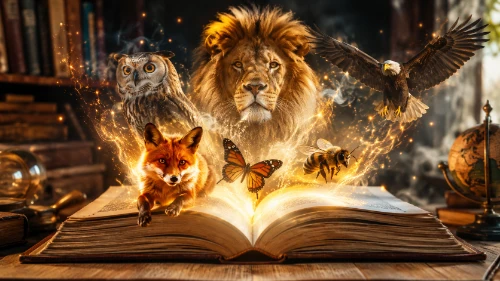
Animals have inspired human language for thousands of years. From calling a brave person a lion to describing a clever thinker as a fox, metaphors with animals help us express ideas in a vivid and memorable way.
These metaphors appear in everyday conversations, literature, speeches, and storytelling because they instantly create strong mental images. Instead of simply saying someone is brave or hardworking, animal metaphors allow readers to feel those qualities through familiar symbols.
In this complete guide, you’ll discover what animal metaphors are, why they matter, how to use them correctly, and over 80 examples with meanings and sentences.
What Are Metaphors with Animals?
Animal metaphors are figures of speech that describe a person, object, or situation by directly comparing it to an animal without using words such as “like” or “as.”
For example:
- He is a lion in the courtroom.
- She became a butterfly after graduation.
- My grandfather is an owl.
These expressions don’t mean someone literally becomes an animal. Instead, they borrow the animal’s characteristics to describe personality or behavior.
Why Do Writers Use Animal Metaphors?
Animal metaphors make writing:
- More vivid
- Easier to remember
- Emotionally engaging
- Rich in symbolism
- More descriptive
Readers instantly recognize traits associated with animals, making communication faster and more powerful.
Quick Animal Symbolism Chart
| Animal | Represents |
| Lion | Courage and leadership |
| Fox | Intelligence and cleverness |
| Owl | Wisdom |
| Dove | Peace |
| Wolf | Independence |
| Bee | Hard work |
| Butterfly | Transformation |
| Eagle | Vision |
| Peacock | Pride |
| Snake | Betrayal |
| Turtle | Patience |
| Horse | Endurance |
| Shark | Aggression |
| Lamb | Innocence |
| Elephant | Memory and strength |
40 Positive Metaphors with Animals
1. A Lion
Meaning: A brave leader
Example: Our captain is a lion under pressure.
2. An Owl
Meaning: A wise person
Example: My grandmother is the owl of our family.
3. A Bee
Meaning: Hardworking individual
Example: She is a busy bee every morning.
4. An Eagle
Meaning: Someone with vision
Example: The CEO is an eagle who sees opportunities before others.
5. A Butterfly
Meaning: Personal growth
Example: College turned him into a butterfly.
6. A Horse
Meaning: Reliable worker
Example: He’s the workhorse of the company.
7. A Dolphin
Meaning: Intelligent and friendly
Example: She is the dolphin of our class.
8. A Swan
Meaning: Grace and elegance
Example: The dancer was a swan on stage.
9. A Falcon
Meaning: Precision and focus
Example: The detective became a falcon during the investigation.
10. An Elephant
Meaning: Strength and memory
Example: Grandpa is an elephant who remembers everything.
20 Negative Animal Metaphors
- Snake – A deceitful person
- Rat – Someone who betrays others
- Pig – A messy individual
- Donkey – A stubborn person
- Vulture – Someone who profits from others’ misfortune
- Hyena – Cruel or mocking personality
- Shark – Ruthless businessperson
- Sheep – Blind follower
- Leech – Someone who depends on others
- Sloth – Lazy person
Each metaphor can include:
- Meaning
- Example sentence
- Best context for use
Funny Animal Metaphors
- My toddler is a tiny tornado monkey.
- He’s a penguin on the dance floor.
- She’s a squirrel whenever desserts appear.
- Grandpa becomes a sleepy koala after lunch.
- My roommate is a raccoon at midnight.
These playful metaphors make conversations entertaining and memorable.
Animal Metaphors in Literature
Writers have long used animal imagery to represent human nature.
Examples include wolves symbolizing danger, lambs representing innocence, and lions standing for courage and authority. Entire literary works have also used animals as metaphors to explore politics, society, and morality, showing how deeply animal symbolism is woven into storytelling.
Animal Metaphors Around the World
Animal symbolism can change across cultures.
- Owls often symbolize wisdom in many Western traditions.
- In some cultures, the same bird may represent mystery or bad luck.
- Dragons symbolize destruction in some traditions but power and prosperity in others.
Understanding cultural context helps writers choose metaphors more effectively.
How to Create Your Own Animal Metaphor
Creating original metaphors is easier than many people think.
Step 1
Choose a personality trait.
Example: Courage
Step 2
Think of an animal known for that quality.
Example: Lion
Step 3
Write a direct comparison.
“He is the lion of our team.”
Avoid overused comparisons whenever possible and look for fresh combinations that fit your context naturally.
Metaphor vs Simile vs Idiom
| Metaphor | Simile | Idiom |
| He is a lion. | He is like a lion. | Let the cat out of the bag. |
A metaphor makes a direct comparison, a simile uses “like” or “as,” while an idiom has a figurative meaning that cannot be understood literally.
Common Mistakes to Avoid
- Mixing metaphors in one sentence
- Using clichés repeatedly
- Choosing animals with unclear symbolism
- Ignoring cultural meanings
- Overloading paragraphs with metaphors
Using one strong metaphor often creates a greater impact than several weak ones.
Conclusion
Metaphors with animals bring language to life by connecting human experiences with the natural world. Whether you describe someone as a fearless lion, a wise owl, or a hardworking bee, these expressions make communication more engaging and memorable.
Learning and using animal metaphors can improve creative writing, storytelling, classroom learning, and everyday conversations while helping readers visualize ideas more clearly.
FAQs
They are figurative expressions that describe people or situations by directly comparing them to animals to highlight shared qualities.
Because animals are associated with familiar traits, making descriptions easier to understand and remember.
A metaphor says someone is an animal, while a simile compares someone to an animal using “like” or “as.”
The owl is widely recognized as a symbol of wisdom and knowledge.
The lion is one of the most common metaphors for courage and leadership.
Yes. Animals such as snakes, vultures, and rats are often used to symbolize betrayal, greed, or dishonesty.
Yes. They improve vocabulary, creativity, reading comprehension, and descriptive writing skills.
Choose a human trait, identify an animal associated with that quality, and make a direct comparison without using “like” or “as.”
Yes. Many famous authors use animal metaphors to symbolize emotions, personalities, and social ideas.
Absolutely. Cultural traditions often influence whether an animal represents wisdom, luck, power, mystery, or danger.