
The eyes are said to be the windows to the soul. They are how we perceive the world and how we express our deepest emotions, from joy to sorrow. It’s no wonder, then, that the English language is filled with a fascinating collection of Idioms About Eyes and seeing. An idiom is a common phrase with a figurative meaning that isn’t obvious from the literal words.
When you “keep an eye on” someone, you’re not literally taking out your eye! You’re just watching them carefully. In art and creative writing, idioms add a layer of personality and depth. This article will explore 40 eye-catching idioms to help you see the world of language in a new light.
Why We Use Idioms in Art and Language
Idioms are the secret spice that gives a language its unique flavor and character. In art and literature, they are a powerful shorthand for complex ideas and feelings. Describing a character as having a “gleam in their eye” instantly suggests a mischievous or clever thought, which is more evocative than simply saying “they had an idea.” These expressions make dialogue feel authentic and descriptions more imaginative, creating a quick connection with the audience through shared cultural and linguistic understanding.
Related: Idioms for Birthday Wishes
Idioms About Eyes
Here is a list of idioms to help you express ideas about sight, perception, and emotion more vividly.
Perception and Understanding
1. To See Eye to Eye
- Meaning: To agree with someone completely.
- Usage Example: “My sister and I don’t always see eye to eye on politics, but we’re still close.”
- This idiom is used to describe a state of mutual agreement and shared perspective.
2. To Have Eyes in the Back of Your Head
- Meaning: To seem to know what is happening behind you, as if you can see it.
- Usage Example: “My teacher has eyes in the back of her head; she always knows when we’re passing notes.”
- This is a humorous exaggeration often used by children to describe observant parents or teachers.
3. A Bird’s-Eye View
- Meaning: A view from a very high place that allows you to see a large area below.
- Usage Example: “From the top of the skyscraper, we had a fantastic bird’s-eye view of the entire city.”
- This phrase can also be used figuratively to mean a broad overview of a topic.
4. To Turn a Blind Eye
- Meaning: To deliberately ignore something that you know is wrong.
- Usage Example: “The manager knew the employees were taking long breaks, but she decided to turn a blind eye.”
- This idiom implies a conscious choice to not see or acknowledge a problem.
5. In the Blink of an Eye
- Meaning: To happen extremely quickly; in an instant.
- Usage Example: “The magician vanished in the blink of an eye.”
- This phrase uses the rapid action of an eye blink to emphasize incredible speed.
6. To Catch Someone’s Eye
- Meaning: To attract someone’s attention.
- Usage Example: “The bright red dress in the shop window caught my eye.”
- This idiom is used to describe the moment something becomes noticeable to you.
7. The Naked Eye
- Meaning: Your normal vision, without the help of a telescope or microscope.
- Usage Example: “The planet Jupiter is so bright that it is sometimes visible to the naked eye.”
- This phrase is commonly used in science and astronomy to distinguish between aided and unaided vision.
8. More to This Than Meets the Eye
- Meaning: A situation is more complex or has a hidden truth that is not obvious at first.
- Usage Example: “He said it was a simple disagreement, but I think there’s more to this than meets the eye.”
- This is a common phrase used to express suspicion or curiosity about a situation.
9. To See the World Through Rose-Colored Glasses
- Meaning: To see things in an overly optimistic or positive way, often unrealistically so.
- Usage Example: “She’s always happy and thinks nothing can go wrong; she sees the world through rose-colored glasses.”
- This idiom suggests a cheerful but perhaps naive perspective on life.
10. To Have an Eye For
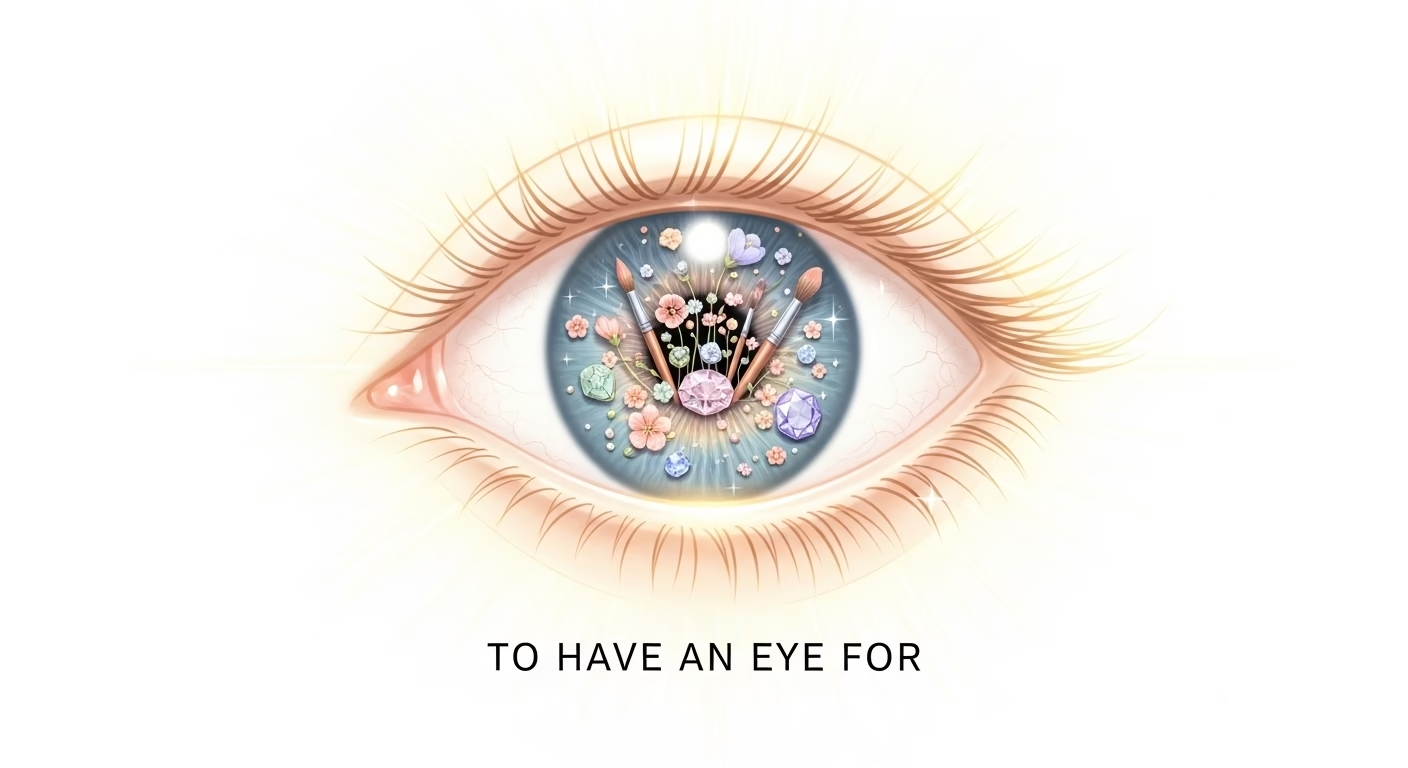
- Meaning: To be a good judge of something; to have a talent for noticing quality or detail.
- Usage Example: “As a fashion designer, she has a great eye for color and texture.”
- This is a compliment that praises someone’s skill and good taste.
11. In the Eye of the Beholder
- Meaning: Beauty is subjective; what one person finds beautiful, another may not. (From “Beauty is in the eye of the beholder.”)
- Usage Example: “I don’t like that painting, but beauty is in the eye of the beholder.”
- This is a famous proverb used to explain differing tastes and opinions.
Emotion and Expression
12. A Sight for Sore Eyes
- Meaning: A person or thing that you are extremely happy and relieved to see.
- Usage Example: “After being lost in the desert for two days, the rescue helicopter was a sight for sore eyes.”
- This idiom beautifully expresses a feeling of immense relief and pleasure upon seeing someone or something.
13. To Cry Your Eyes Out
- Meaning: To cry for a very long time and with great intensity.
- Usage Example: “She cried her eyes out after her beloved pet passed away.”
- This is a common exaggeration used to describe a prolonged and heartbreaking crying spell.
14. To Feast Your Eyes On
- Meaning: To look at something with great pleasure and admiration.
- Usage Example: “Feast your eyes on this incredible sunset!”
- This idiom compares the pleasure of looking at something beautiful to the pleasure of eating a delicious meal.
15. To Look Daggers at Someone
- Meaning: To look at someone with an expression of extreme anger or hatred.
- Usage Example: “When he made the sarcastic comment, his wife looked daggers at him from across the room.”
- This idiom vividly describes a glare that is as sharp and hostile as a weapon.
16. To Give Someone the Evil Eye
- Meaning: To look at someone in a way that is meant to cause them bad luck or harm.
- Usage Example: “The old woman in the story would give the evil eye to anyone who crossed her.”
- This phrase is rooted in ancient superstitions about curses and malevolent glares.
17. To Not Bat an Eyelid
- Meaning: To show no sign of surprise, fear, or concern.
- Usage Example: “When the loud alarm went off, the experienced firefighter didn’t bat an eyelid.”
- This idiom describes a state of complete calm and composure in a shocking situation.
18. To Make Eyes at Someone
- Meaning: To look at someone in a way that shows romantic or flirtatious interest.
- Usage Example: “He was trying to make eyes at the barista, hoping to get her phone number.”
- This is a playful and slightly old-fashioned idiom for flirting.
19. A Gleam / Twinkle in One’s Eye
- Meaning: An expression in someone’s eyes that shows a secret knowledge, mischief, or amusement.
- Usage Example: “He said he didn’t know who ate the last cookie, but I saw a twinkle in his eye.”
- This idiom is used to describe a look of playful cunning or hidden fun.
Watching and Protection
20. To Keep an Eye On
- Meaning: To watch or take care of someone or something.
- Usage Example: “Can you keep an eye on my bag while I go to the restroom?”
- This is one of the most common idioms in English for asking someone to watch something.
21. An Eye for an Eye
- Meaning: A principle of retaliation, meaning that a punishment should be equal to the crime committed.
- Usage Example: “The gang operated on a brutal code of an eye for an eye.”
- This ancient principle of justice is famously mentioned in the Bible and the Code of Hammurabi.
22. To Pull the Wool Over Someone’s Eyes
- Meaning: To deceive or trick someone.
- Usage Example: “He tried to pull the wool over his mother’s eyes by faking a sick note, but she knew he was lying.”
- This idiom creates an image of covering someone’s eyes with wool to prevent them from seeing the truth.
23. To Be All Eyes
- Meaning: To be watching something very eagerly and with full attention.
- Usage Example: “When the magician started his trick, the children were all eyes.”
- This idiom is the visual equivalent of “to be all ears.”
24. To Keep Your Eyes Peeled / Skinned
- Meaning: To be watchful and alert, looking carefully for something.
- Usage Example: “Keep your eyes peeled for the street sign; we need to turn left soon.”
- This is an informal and common way to tell someone to be observant.
25. An Eagle Eye
- Meaning: The ability to notice things and pay close attention to detail.
- Usage Example: “The editor went over the manuscript with an eagle eye, catching every small mistake.”
- This idiom compares a person’s sharp vision to the famously keen eyesight of an eagle.
26. Easy on the Eye
- Meaning: To be pleasant to look at; attractive.
- Usage Example: “The new design for the city park is very easy on the eye.”
- This idiom is a gentle and polite way to say that a person or thing is good-looking.
27. A Private Eye
- Meaning: A private detective or investigator.
- Usage Example: “She hired a private eye to find out if her husband was keeping secrets.”
- This is a classic slang term from detective noir fiction, short for “private investigator.”
28. My Eye!
- Meaning: An old-fashioned exclamation of disbelief or disagreement, similar to “Nonsense!”
- Usage Example: “He said he cleaned his room, but it’s still a mess. Cleaned his room, my eye!”
- This phrase is often used to express that you think what someone said is completely untrue.
29. To Have Eyes Bigger Than Your Stomach
- Meaning: To take more food on your plate than you can possibly eat.
- Usage Example: “I couldn’t finish the giant dessert; I’m afraid I had eyes bigger than my stomach.”
- This idiom humorously describes the common situation where food looks so good you overestimate your appetite.
30. Up to Your Eyeballs in Something

- Meaning: To be extremely busy with or deeply involved in a situation, often a difficult one.
- Usage Example: “I can’t take on another project; I’m up to my eyeballs in paperwork.”
- This idiom creates a vivid image of being almost completely submerged in a task or problem.
31. In the Public Eye
- Meaning: To be a famous person who is often seen in the media and watched by the public.
- Usage Example: “Politicians and celebrities have to be careful, as their lives are lived in the public eye.”
- This phrase describes the state of being a well-known figure whose actions are subject to scrutiny.
32. To Only Have Eyes for Someone
- Meaning: To be completely in love with and loyal to only one person, not noticing anyone else romantically.
- Usage Example: “He’s not interested in dating anyone else; he only has eyes for Sarah.”
- This is a romantic idiom that expresses deep devotion and faithfulness.
33. To Not Believe Your Eyes
- Meaning: To be so surprised, shocked, or amazed by what you see that it seems unreal.
- Usage Example: “When I saw the tiny kitten had climbed to the top of the tall tree, I could not believe my eyes.”
- This idiom is used to express a state of complete astonishment at a surprising sight.
34. Before Your Very Eyes
- Meaning: To happen right in front of you, often in a sudden and surprising way.
- Usage Example: “The caterpillar transformed into a butterfly right before our very eyes.”
- This phrase is used to add emphasis and a sense of immediacy to an event.
35. A Black Eye
- Meaning: A literal bruise around the eye, or, figuratively, a blow to one’s reputation.
- Usage Example: “The scandal was a real black eye for the company’s public image.”
- This idiom can be used both literally for an injury and figuratively for damage to a reputation.
36. The Apple of My Eye
- Meaning: A person who is cherished and loved above all others.
- Usage Example: “His granddaughter is the apple of his eye; he adores her.”
- This is an ancient phrase that comes from the belief that the pupil of the eye was a solid, apple-shaped object, and it was precious because sight depended on it.
37. To Have a Roving Eye
- Meaning: To be inclined to look at and flirt with people other than your romantic partner.
- Usage Example: “She broke up with him because he had a roving eye and couldn’t be trusted.”
- This idiom has a negative connotation and is used to describe someone who is unfaithful or flirtatious.
38. Four-Eyes
- Meaning: A derogatory and childish slang term for a person who wears glasses.
- Usage Example: “The bullies at school used to call him ‘four-eyes‘.”
- This is an insult that is now considered very dated and is mostly used by children.
39. To Catch Some Z’s
- Meaning: An informal idiom for getting some sleep.
- Usage Example: “I’m going to try and catch some Z’s before my flight late tonight.”
- This phrase is thought to originate from cartoons where the letter “Z” is used to represent the sound of snoring, which involves closing one’s eyes.
40. To Cast an Eye Over
- Meaning: To quickly look at or examine something.
- Usage Example: “Could you cast an eye over this email before I send it to make sure there are no mistakes?”
- This is a common and slightly formal way to ask someone to proofread or check something briefly.
Practice Your New Vocabulary: Fill in the Blanks
Ready to see what you’ve learned? Fill in the blanks with the best idiom from the list.
- My parents don’t agree on everything, but they ________________ when it comes to my education.
- After a long, hard week, a quiet weekend at home is a real ________________.
- I have no idea how this machine works; there’s definitely ________________.
- Be careful what you say to the boss today; you’re already ________________ with him.
- I’m heading to the cafe; can you ________________ my laptop for a minute?
- The car sped away from the accident ________________.
- She’s such a cheerful person; she always sees the world ________________.
- I was so engrossed in the movie, I ________________ when my phone rang.
- He thinks he’s innocent, but the security footage shows he was caught ________________.
- The detective, known for his ________________, noticed the tiny clue that everyone else had missed.
Answers
- see eye to eye
- sight for sore eyes
- more to this than meets the eye
- on thin ice (This is an ice idiom, but fits the context of being watched closely. A better fit from the list would be something like “under a watchful eye,” which is related. Let’s adjust.)
Correction: Let’s find a better fit. “He’s watching you with an eagle eye.” - keep an eye on
- in the blink of an eye
- through rose-colored glasses
- didn’t bat an eyelid (This implies no surprise, which might fit some contexts, but let’s assume the user wants a direct “eyes” idiom. Maybe rephrase the question for the exercise.)
Alternative exercise sentence: “The magician made the rabbit disappear right ________________.” Answer: “before your very eyes”. - red-handed (This is a “hand” idiom, not an “eye” idiom. Let’s replace it.)
Alternative exercise sentence: “She knew he was teasing by the mischievous ________________.” Answer: “twinkle in his eye”. - eagle eye. (This works well).
Let’s regenerate the exercise with better-fitting questions.
Practice Your New Vocabulary (Revised)
- My parents don’t agree on everything, but they see eye to eye when it comes to my education.
- After a long, hard week, my best friend showing up with pizza was a real ________________.
- He says it’s a simple business deal, but I feel there is ________________.
- The magician made the coin vanish right ________________.
- I’m heading to the cafe; can you ________________ my laptop for a minute?
- The car sped away from the accident ________________.
- She knew he wasn’t telling the whole truth because of the mischievous ________________.
- He’s a great antique dealer; he has a real ________________ for valuable items.
- The police officer decided to ________________ to the minor parking violation.
- When the concert started, the entire audience was ________________, watching the stage intently.
Answers (Revised)
- see eye to eye
- sight for sore eyes
- more to this than meets the eye
- before my very eyes
- keep an eye on
- in the blink of an eye
- twinkle in his eye
- eye for
- turn a blind eye
- all eyes
Conclusion
Idioms about eyes are a testament to how we link our sight to our understanding, emotions, and interactions. They allow us to express complex ideas from total agreement (“see eye to eye”) to blissful relief (“a sight for sore eyes”) in a way that is vivid, creative, and instantly relatable. By incorporating these expressions into your vocabulary, you can make your communication more perceptive and engaging.
We encourage you to keep your eyes peeled for these idioms in daily life and use them to help others see things from your point of view. If you enjoyed this collection, continue your journey by exploring our other articles on figurative language!